Ukraine IT Outsourcing in 2026: Why German Enterprises Still Choose Ukrainian Developers
Ukraine's IT market reached $7.85B in 2026 with 2,200 active tech companies — accounting for 41.6% of national service exports. Here's why Evolvice has trusted Ukrainian developers since 2012, and how the model works under wartime resilience.
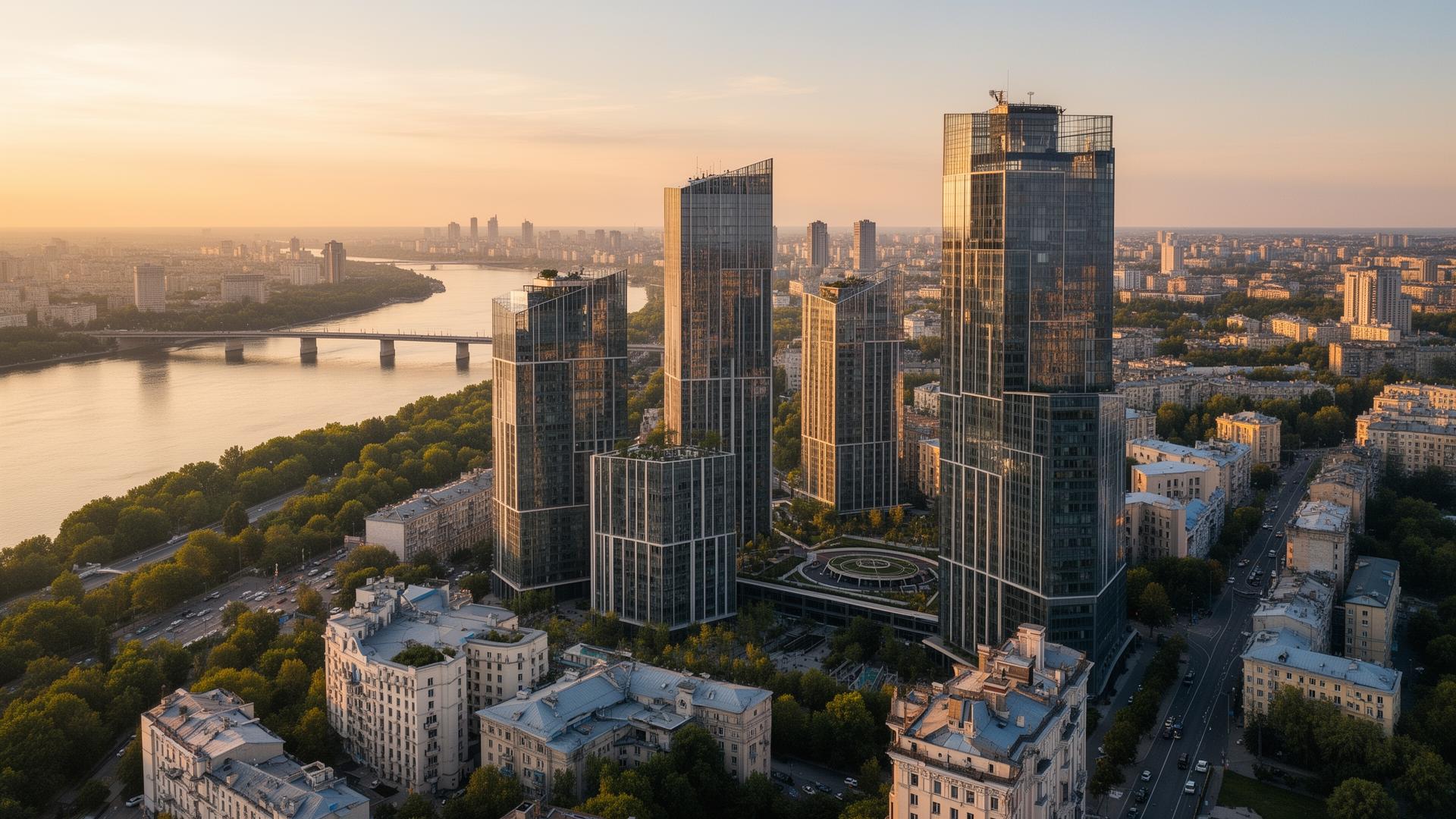
In 2026, Ukraine remains one of Europe's leading nearshore destinations: $7.85B IT market, 2,200 active companies, and IT services driving 41.6% of all Ukrainian service exports (Ministry of Digital Transformation, April 2026). Evolvice has operated Ukrainian development centres since 2012, combining German project management, ISO 9001 / ISO 27001 certifications, and battle-tested business continuity to deliver nearshore software development for DACH and KSA enterprises.
Since 2012, Evolvice has operated software development centres in Ukraine. In our daily delivery work, we constantly benefit from the strengths of Ukrainian engineers: deep technical training, English fluency, EU-aligned working hours, and a culture of ownership. Despite the war, Ukraine remains one of the most mature IT outsourcing destinations in Eastern Europe — and the data backs it up.
According to the Ministry of Digital Transformation of Ukraine (April 2026), the country's IT market reached $7.85 billion, with 2,200 active tech companies driving 41.6% of all Ukrainian service exports. The "Diia.City" tax regime alone now hosts more than 1,800 resident companies. For German and DACH enterprises looking for European-time-zone delivery without West-European costs, Ukraine is once again on the shortlist for 2026.
So why is Ukraine still attractive as an outsourcing destination — and what has changed since 2018? This is the answer.
Ukraine's IT Industry in 2026: The Numbers That Matter
Over the last fifteen years, the Ukrainian IT industry has grown by nearly 40 times. Even with the full-scale invasion, the sector kept growing — IT exports stayed above $6.4B in 2024 and recovered to $7.85B in 2026.
The headline figures B2B buyers should know:
- $7.85B total IT market value in 2026 (Ministry of Digital Transformation).
- 41.6% share of all Ukrainian service exports — IT is now the largest export sector after agriculture.
- 2,200+ active IT companies and ~300,000 tech specialists working in the country and abroad.
- 1,800+ companies registered in the Diia.City special tax regime.
- ~110 global R&D centres of multinational corporations.
- 80%+ of Ukrainian developers work fluently in English; nearshore engagement with German clients is the dominant export model.
For comparison: in 2018 the IT sector represented ~4% of Ukrainian GDP with ~185,000 specialists. In 2026 it is the country's largest service export, with double the workforce and a far more mature delivery ecosystem.
Diia.City: The Legal Framework Most Buyers Don't Know About
Diia.City is Ukraine's special legal and tax regime for IT companies, introduced in 2022. It offers a 9% corporate tax (or 18% on dividends), a 5% personal income tax for engineers, and a hybrid contract model that combines the flexibility of contractors with the stability of employees. For European clients this matters because Diia.City residents publish audited financials, are subject to GDPR-aligned data protection rules, and can sign English-law contracts directly. Read more about Diia.City.
What Is So Advantageous About Outsourcing in Ukraine in 2026?
According to UkraineInvest, more than 100 Fortune 500 companies currently consume Ukrainian IT services that were previously sourced from India or Israel. More than 4,000 tech companies and 1,500+ software development centres are based in Ukraine, and the country has emerged as a global R&D hub with over 110 multinational R&D facilities. The reasons are concrete and measurable.
1. The Best Price-to-Quality Ratio in Europe
The average mid-level Ukrainian developer in 2026 costs roughly €3,500–€5,500 per month all-in, depending on stack and seniority — typically below equivalent fully-loaded in-house hires in Munich, Stuttgart or Berlin (the gap depends on stack, seniority and engagement model, and is quoted per profile). Senior architects and platform engineers are higher, but still well below DACH market rates. Combined with ISO-certified delivery processes, this is the best price-to-quality ratio currently available inside the European time zone.
2. CET ±1 Time Zone
Ukraine sits one hour ahead of CET — close enough that daily stand-ups, sprint ceremonies, and incident calls happen in real working hours, not in offshore overlap windows. For DACH clients this means full-business-day overlap and same-day response on critical issues, which is one reason German firms prefer Ukrainian and Egyptian nearshore teams over far-shore alternatives.
3. A Constant Stream of New IT Talent
Ukraine ranks in the global top 10 for engineering, manufacturing, and construction graduates, with roughly 130,000 STEM graduates per year. The majority are fluent in English. Many are active in the local tech community, attend conferences, and contribute to open-source projects. This pipeline is the reason Ukraine has not seen the skills shortage that affects most EU countries in 2026.
4. Cultural and Process Compatibility with DACH
Ukrainian engineering culture is direct, ownership-driven, and comfortable with German-style structure: written specifications, sprint planning, code review, and clear escalation paths. Most of our Ukrainian engineers have worked with German or DACH clients for years and understand the expectations around documentation, quality, and security.
5. Proven Wartime Resilience
Since 2022, Ukraine's IT sector has delivered consistently despite air raids, blackouts, and infrastructure attacks. The reason is investment in redundancy: Starlink terminals, generators, lithium battery banks, and distributed teams across western Ukraine and EU relocation hubs. Read our deep-dive on how Ukrainian IT teams stay productive during the war for the operational details.
Practical next step
Comparing nearshore partners?
Nearshore Delivery Due-Diligence Checklist — The contractual, security and delivery questions to ask before committing to a nearshore partner.
Send it to your work email. No newsletter, no follow-up sequence.
Where Ukrainian Engineers Lead Technically
Ukraine's developer mix in 2026 is dominated by JavaScript/TypeScript, .NET, Java, Python, and increasingly AI/ML and data engineering — with strong specialisation in fintech, e-commerce, healthtech, and industrial software.
The strongest skill clusters we see in the Ukrainian market today:
- Web platforms: React, Next.js, TypeScript, Node.js, .NET 8 / 9, ASP.NET Core, Java Spring Boot.
- Cloud and DevOps: Azure, AWS, Kubernetes, Terraform, GitHub Actions — both for greenfield builds and large-scale migrations.
- Data and AI: Python, PySpark, Databricks, Snowflake, vector databases, and applied LLM/RAG engineering for enterprise use cases.
- Mobile: Native iOS / Android plus cross-platform Flutter and React Native.
- Industrial and CAD: Solid bench of Ukrainian CAD engineers and embedded developers serving German Mittelstand industrial clients.
- Cybersecurity: SOC, SIEM, application security, and ISO 27001 / SAMA / NCA compliance work — see our cybersecurity services.
How Evolvice Operates in Ukraine
Evolvice has been active in Ukraine since 2012 as a German service provider. We run development centres in Kyiv and Uzhgorod, employ engineers under the Diia.City regime, and integrate them into client teams under German project management and ISO 9001 / ISO 27001 governance.
What this means in practice for a DACH or KSA client:
- One contract, one invoice in Germany. You sign with Evolvice GmbH (Stuttgart), under German law. You do not have to set up a Ukrainian legal entity, manage payroll, or handle visa logistics.
- Dedicated team, not body shop. We assemble teams matched to your stack and domain, with stable composition, named individuals, and direct line of communication — not anonymous interchangeable resources.
- Built-in business continuity. Each delivery team has a primary location (typically Kyiv or Uzhgorod), a documented failover plan, and a parallel hub in Cairo or Lisbon for critical workloads.
- Compliance-grade infrastructure. ISO 9001:2015 and ISO 27001:2022 audits cover both German HQ and Ukrainian centres. GDPR controls are enforced end-to-end. For regulated workloads we also align with the DACH-KSA cross-border compliance services.
When Ukraine Is the Right Choice — and When It Isn't
Ukraine is the right nearshore choice when you need senior European-time-zone engineers, complex product work, and long-term team stability. It is not always the right choice for short-term staff augmentation or work that legally has to remain inside the EU/EEA.
Choose Ukraine when:
- You are building or scaling a product team for 12+ months and want senior, English-fluent engineers in a CET-aligned time zone.
- You need .NET, JVM, JavaScript/TypeScript, cloud, or data engineering depth at a lower fully-loaded cost than DACH in-house hiring, quoted per engineer profile.
- You want a German contracting partner with German project management on top of the delivery team.
Consider EU-based delivery (e.g. our Portugal hub) instead when:
- Your data must remain physically inside the EU/EEA for regulatory reasons that cannot be solved with adequacy mechanisms.
- You require on-site presence multiple times per quarter and prefer a Schengen-only travel footprint.
Your First Step
If you are convinced that Ukraine is a good fit for your software development — either as a dedicated team or as senior IT specialists integrated into your existing organisation — you need a partner who knows the ecosystem from the inside. Evolvice has been a German service provider active in Ukraine since 2012. We offer custom software solutions and have built and operated Ukrainian development centres and IT hubs in Kyiv and Uzhgorod for more than a decade.
Why Choose Evolvice as Your Outsourcing Partner
We know how to operate the business with all its specifics in Ukraine. We have spent more than a decade building distributed and remote teams across Germany, Ukraine, Egypt, Portugal, and Saudi Arabia. When you outsource, you want it to be fast and efficient, secure and flexible. We provide everything you need: legal contracts in Germany, infrastructure, business premises, and efficient administration. When building dedicated remote teams, our recruiters find the right people and we integrate them into your in-house team — not the other way around.
If you would like to know more about Ukraine and what is realistic for your roadmap, contact the Evolvice team. Many of our clients have been working with us for a decade or more — we would be happy to tell you more.
Practical next step
Comparing nearshore partners?
Nearshore Delivery Due-Diligence Checklist — The contractual, security and delivery questions to ask before committing to a nearshore partner.
Send it to your work email. No newsletter, no follow-up sequence.
Meet the Team

Sherif Adel
Author

Amira Adel
Editor
Want a senior nearshore team from Ukraine, with German project management?
Talk to the Evolvice TeamFrequently Asked Questions
How big is Ukraine's IT industry in 2026?
Ukraine's IT market reached $7.85 billion in 2026 with around 2,200 active tech companies, according to the Ministry of Digital Transformation (April 2026). The IT sector is responsible for 41.6% of all Ukrainian service exports, making it the largest service export industry in the country.
How many software developers are there in Ukraine?
There are roughly 300,000 IT specialists working in Ukraine and abroad in 2026. Around 130,000 STEM graduates enter the market every year, and more than 80% of Ukrainian developers work fluently in English.
What is Diia.City and why does it matter for German clients?
Diia.City is Ukraine's special legal and tax regime for IT companies, with a 9% corporate income tax, a 5% personal income tax for engineers, and English-law-compatible contracting. More than 1,800 IT companies are residents in 2026. For German clients it means transparent, audited counterparties operating under GDPR-aligned rules.
Is it still safe to outsource to Ukraine in 2026?
Yes. Ukrainian IT companies have invested heavily in redundancy: Starlink, generators, battery backups, and distributed teams. Evolvice operates from Kyiv and Uzhgorod with documented business continuity and parallel hubs in Cairo and Lisbon. Our delivery rates have stayed above 99% throughout the war. See our detailed analysis: 'Is It Safe to Do Business in Ukraine?'
How much does a Ukrainian developer cost compared to a German hire?
In 2026 a mid-level Ukrainian developer typically costs €3,500–€5,500 per month all-in via a German contracting partner like Evolvice — typically below the fully-loaded cost of an equivalent in-house hire in Stuttgart, Munich, or Berlin. Senior architects cost more, but still well below DACH in-house rates.
What technologies are Ukrainian developers strongest in?
JavaScript/TypeScript (React, Next.js, Node.js), .NET (8/9, ASP.NET Core), Java (Spring Boot), Python, cloud and DevOps (Azure, AWS, Kubernetes, Terraform), data and AI engineering (Databricks, Snowflake, RAG/LLM), mobile (iOS, Android, Flutter), and industrial / CAD engineering.